AI in HR and Onboarding
Embracing AI for onboarding, we've launched a privacy-focused, efficient AI assistant to streamline new hires' integration, emphasizing continuous improvement and advanced technology adoption for a transformative workplace impact.

In this chapter, we're diving into how a custom GPT can revolutionize the onboarding process for new employees. Imagine having a personal onboarding assistant tailored specifically for each new hire. This goes beyond just making life easier for everyone involved - it's about streamlining the entire onboarding process, ensuring new employees feel welcomed and supported, and greatly reducing the workload and stress on your HR team.
By integrating a custom GPT into your onboarding process, we're not just talking about a small improvement. We're looking at a major leap in productivity and a noticeable decrease in the time it takes to get new employees fully up to speed. This chapter will guide you through creating your very own onboarding assistant, showing you the steps to make this innovative tool a reality in your organization. It's about making a positive impact on your team's efficiency and the overall workplace atmosphere from day one.
Background Story
We've been using Notion as our database tool in the company for quite some time. It began as a small, manageable tool, but as time went by, it transformed into a massive database packed with all sorts of company-related information. This growth, specifically the exponential increase in the volume and diversity of our database content, while impressive, brought its own set of challenges.
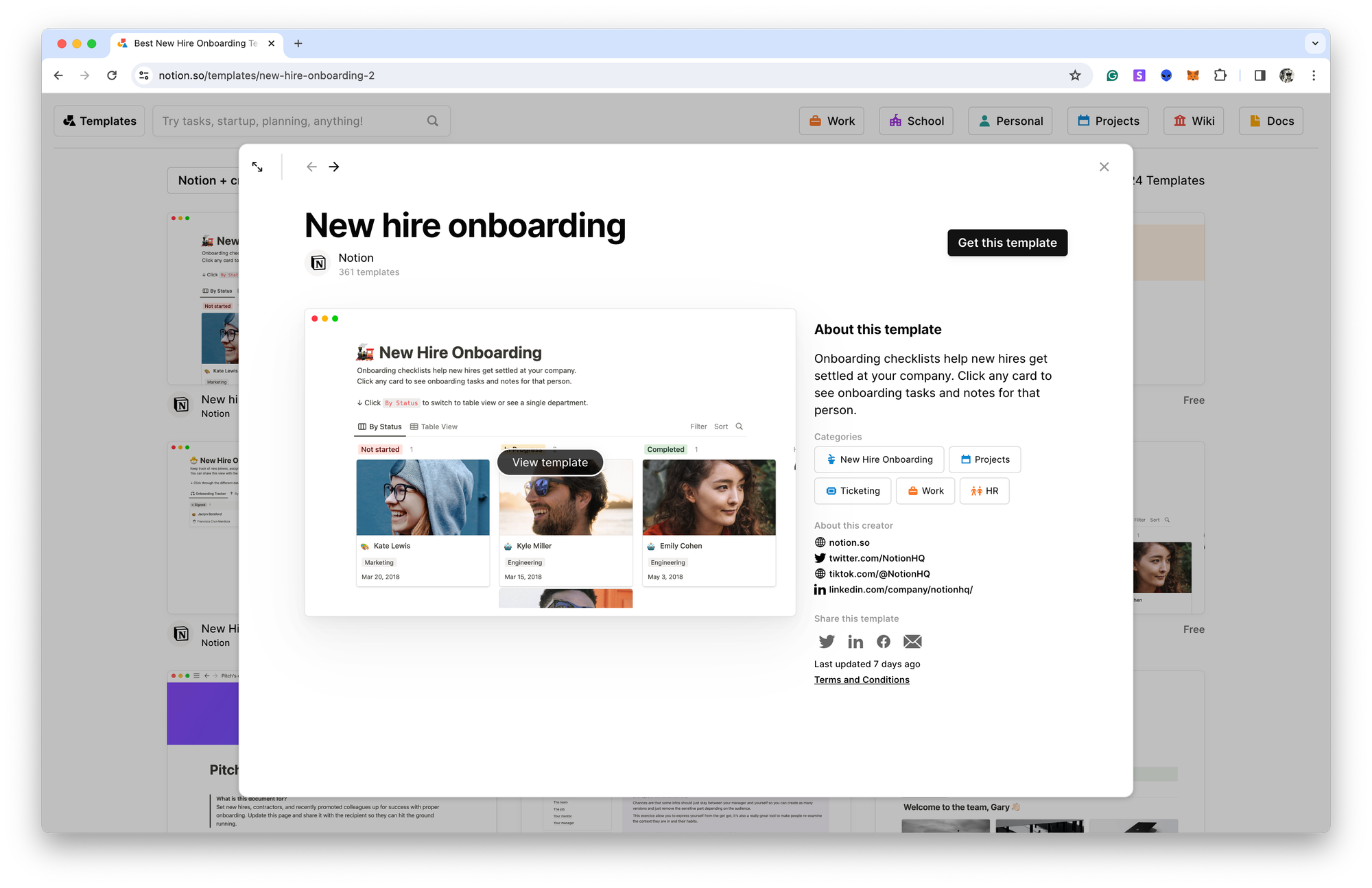
Initially designed to house onboarding notes, the database evolved to encompass a comprehensive repository of how the company operates, including important processes, guidelines, vital documents, and the entire gamut of company rules and ethos. With such an extensive accumulation of data, navigating through the database now feels like trying to find a needle in a haystack. The main issue? It's become really hard to find specific information. This situation underscores the need for a more structured or searchable system to efficiently access the wealth of knowledge stored within.
One significant part of our Notion setup is the onboarding section for new employees. This part is actually pretty thorough and helpful, covering a range of topics necessary for newcomers. For example, it lists the tools new developers will need, the various software we use for our daily work, details about our Slack channels, and other important bits of information. Additionally, this section introduces new employees to the team, detailing the company's structure, the roles of each team member, their names, and their responsibilities. This comprehensive overview is like a one-stop guide for anyone joining our team, giving them a head start on understanding how we operate and integrating them into our community more seamlessly.
However, even with such valuable content, the overall complexity of our Notion database makes it less user-friendly than we'd like, especially for those just starting out with us. The real challenge lies in making this wealth of information more accessible. We need to streamline our database so that finding information is quick and straightforward. It's important for new team members to easily access the resources they need without feeling overwhelmed by the sheer volume of data. As we move forward, our focus will be on simplifying our Notion setup to ensure that it's not just a repository of information, but a practical and efficient tool for everyone in the company.
Creating a CustomGPT
The idea of leveraging our content-rich Notion database to create a custom GPT (Generative Pre-trained Transformer, aka your very own ChatGPT) is really promising. Think of it as building a digital clone of sorts, as we discussed in the previous article. This custom GPT would feed off the vast information stored in our database, turning it into an interactive, intelligent assistant.
Now, imagine combining this custom GPT with the detailed onboarding information we've accumulated in Notion. The result? A personalized, company-wide assistant that could revolutionize how new employees are integrated into our team. Instead of directing all their initial questions to HR – which, in many small companies and startups, often means the founders or a few overloaded individuals – new team members could simply ask this digital assistant.
This approach has multiple benefits. For starters, it eases the workload on the people who usually handle onboarding, like founders in small companies or startups. They often juggle multiple roles and responsibilities, so having a tool that can take over some of the onboarding process is a huge relief.
Moreover, this custom GPT can provide instant, 24/7 assistance to new hires. They can ask questions whenever they need, getting quick and accurate answers based on the wealth of information in our database. It's like having a knowledgeable colleague available at all times, ready to help with everything from "What's the Wi-Fi password?" to "How do I access our project management tools?"
This kind of system not only streamlines the onboarding process but also empowers new employees. They can independently find the information they need, which helps them feel more confident and less overwhelmed in their first days and weeks. As we continue to refine our internal systems, integrating a custom GPT with our Notion database seems like a smart, forward-thinking move that could significantly benefit our team and the overall workflow.
I have an HR employee, then what?
If you've already invested in HR personnel, that's a great resource to have. One innovative way to maximize their potential is by training them to create and manage custom GPTs (Generative Pre-trained Transformers). This approach can add a whole new dimension to how your HR functions.
First, take a moment to consider the tasks your HR team routinely handles, especially during the onboarding process. Are there repetitive questions and procedures that they go through with every new hire? This is where a custom GPT can be a game changer.
Most companies advise their HR teams to create documentation or onboarding guidelines. But let's be honest – not many people enjoy sifting through pages of documentation. However, if you've got these guides and documents already, they're not just collecting digital dust. They can be the foundation for building a custom, company-specific assistant powered by GPT technology.
This custom GPT can handle a variety of tasks, essentially acting as an interactive guide. It can answer common questions, walk new employees through procedures, and provide instant access to the information contained in your onboarding documentation. This doesn't mean replacing your HR team. Rather, it's about augmenting their capabilities and freeing up their time to focus on more complex, personalized aspects of HR work.
Here's how it could work:
- Training: Your HR team would learn how to feed the GPT with relevant company information, including your existing onboarding materials.
- Customization: They would then tailor the GPT to reflect your company's culture, values, and specific operational procedures.
- Implementation: Once set up, this GPT assistant becomes the first point of contact for new hires, answering their queries and guiding them through the initial stages of their journey in your company.
- Continuous Improvement: Your HR team would monitor and update the GPT as needed, ensuring it stays current and effective.
By leveraging the knowledge and skills of your HR team in this way, you're not just making those "hated guides" useful; you're creating an interactive, engaging, and efficient onboarding experience. This approach can save time, reduce repetitive workloads, and make the whole process more enjoyable for everyone involved.
Implementing an AI Onboarding Assistant with CustomGPT
In this chapter, we will explore the process of implementing an AI Onboarding Assistant using CustomGPT. We will discuss how to get started with this project and the steps involved in creating an effective onboarding experience for users. Let's dive in and learn how to harness the power of AI to improve user onboarding processes.
Registration and Enterprise Access
Begin the process by registering a new professional account on ChatGPT or OpenAI. It's critical to apply for the enterprise version, not just for advanced features, but primarily to ensure the utmost privacy and security for your company's sensitive information. The enterprise version is designed with businesses in mind, offering enhanced security measures that guarantee your onboarding materials and any data you upload remain private. This level of privacy is essential, as it prevents your company's proprietary information from being used to train OpenAI's models, safeguarding your intellectual property and maintaining the confidentiality of your internal processes.
Create your custom GPT
With your enterprise account set up, proceed to create your CustomGPT. This involves crafting a specific, purpose-driven description for your AI. For example, a targeted description could be:
„As an onboarding assistant, you will play a crucial role in ensuring that new employees have a smooth transition into Company X. Your knowledge of the onboarding process, company policies, and procedures will be invaluable in guiding new hires and addressing any questions or concerns they may have. By utilizing the onboarding databases, you will be able to provide accurate and up-to-date information to help new employees feel welcomed and prepared for their roles. Your role is essential in creating a positive onboarding experience that sets the tone for a successful career at Company X.“
This description is pivotal—it serves as the guiding principle for your AI, outlining its role and how it should interact with users. This clarity ensures the AI can be finely tuned to fulfill its intended function effectively.
Fine-Tuning and Testing
With your CustomGPT created, the focus shifts to fine-tuning. This process is iterative and crucial for honing the assistant’s ability to deliver precise and relevant responses. Test the system with a variety of potential inquiries that a new employee might pose, ranging from simple procedural questions to more complex queries about company culture or specific job roles. Adjustments made during this phase are pivotal in shaping an assistant that not only understands the questions but also provides answers that are in harmony with your company’s values and practices.
Upload Databases
Now, we are entering the crucial and important phase of the process. This is the moment where everything comes together and the magic truly begins to unfold.
The effectiveness of your AI onboarding assistant hinges on the quality and depth of the documentation you upload. This step transforms your CustomGPT into a reservoir of knowledge, capable of drawing upon detailed onboarding materials to answer inquiries. By uploading documents related to company policies, procedures, tools, and culture, you empower the AI to offer guidance that mirrors the knowledge an experienced human colleague might share. This ensures that every interaction with the assistant is both informative and reflective of your company's standards and expectations.
Advices for Continuous Improvement
Feedback Collection
Continuous improvement of your AI assistant relies heavily on feedback, particularly from those who have been part of your organization for some time. Encourage a culture where employees are motivated to engage with the AI assistant, critically assessing its responses. They should be instructed to report any inaccuracies, ambiguities, or gaps in the assistant’s knowledge. This feedback is invaluable for refining the assistant's performance and relevance.
Question and Answer Enhancement
Utilize the feedback to systematically update and expand the assistant’s knowledge base. This may involve adding new information to cover previously unaddressed areas, correcting erroneous responses, and continuously updating content to reflect the latest company policies and practices. This ensures that the assistant remains a current and reliable resource for onboarding new employees.
Iterative Updates
The development of your AI onboarding assistant is an ongoing endeavor. As your company grows and evolves, so too will the scope of information required by new hires. Regular updates to the assistant's database are essential to keep pace with changes in company operations, policies, and culture. This commitment to maintaining a current and comprehensive knowledge base underscores the assistant’s value as a dynamic and adaptive onboarding resource.